For my research paper, I will explore the issue of accuracy in eyewitness identification. In order to conduct an analysis of eyewitness identification, I will draw from the fields of psychology and the law.
Eyewitness identification has become one of the most widely studied topics in the areas of psychology and law; primarily because this is an issue that occurs within the legal system and psychology undoubtedly offers explanations for this phenomenon. More often than not the goal of truth discovery is unintentionally neglected in an effort by police officers and investigators to solve the crime. This is an important issue as mistakes in eyewitness identification on behalf of victims of crimes can be detrimental, as well as lead to the production of false positives within the law (those predicted to have committed the crime are in fact innocent).
Inaccuracy in eyewitness identification leads to wrongful convictions, the potential for police to then neglect other leads and instead focus solely on finding evidence that will further implicate their chosen suspect.
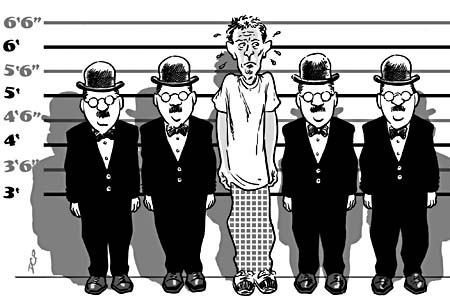
Mistaken eyewitness identification can occur the moment the crime is committed or during the investigation of the crime, through a police lineup. Ultimately, the eyewitness wants to help the police solve the crime, and as a result they feel implicit pressure to identify someone from those presented to them.
A jury will not only assume that any eyewitness identification is accurate, but they will also assume that the victim is confident about their initial description or identification of the perpetrator.
In order to effectively conduct an analysis of this issue, I will need to find research that will provide an analysis of different psychological approaches to understanding errors in eyewitness identification, as well as different statistics that highlight the accuracy in identification and error rate between different races and genders. In general, more background information concerning eyewitness identification and its impact within the legal system will be helpful in constructing an evaluation of the issue.

This research is really interesting to me and reminds me of a study I did within the Law and Psychology department my Sophomore year. We studied eye-witness identification within children and their ability to identify their attacker. We also talked about the difference between these identifications if it was a stranger or if it was someone they previously knew (mother, father, etc.) We were able to focus a lot on their ability to tell the difference between right and wrong when it came to family members, for example, would a little girl identify her attacker as her father after he touched her inappropriately, or would she keep quiet about it? It was interesting to see these children, depending on their age, either keep the secret of their attack/abuse or tell the authorities what happened. Some children are so young that they don't know the difference between right and wrong and would assume the actions they had to go through was normal, simply because they didn't know anything else with their attacker.
ReplyDelete